
When Slowing Down Feels Uncomfortable: Learning to Trust a Gentler Pace

Last week, I wrote about choosing a softer way to move through change—less pressure, more intention, and more room to listen to yourself. This week, I want to stay with that idea and explore something that often gets in the way: slowing down can feel surprisingly uncomfortable when you are used to being the person who keeps everything moving.
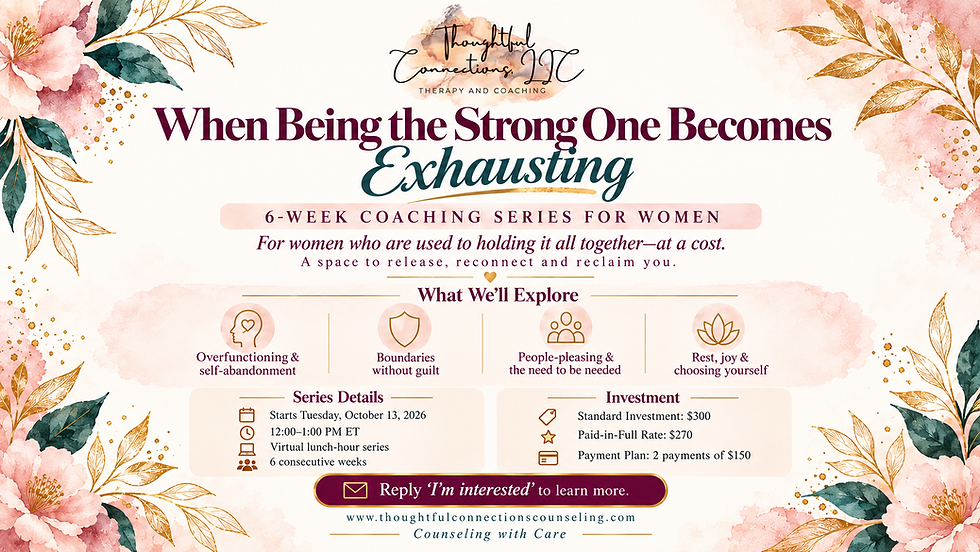
For many women, professionals, caregivers, and people who have spent years being dependable, productive, or emotionally strong, a gentler pace does not always feel peaceful at first. Sometimes it feels irresponsible. Sometimes it feels unfamiliar. Sometimes it creates enough quiet for emotions, needs, and exhaustion to become harder to ignore.
Why Slowing Down Can Feel So Uncomfortable
When your identity has been built around being capable, needed, organized, or strong, slowing down can challenge more than your schedule. It can challenge the story you have learned to tell yourself about who you are and what makes you valuable.
You may notice thoughts such as: “I should be doing more.” “I’m falling behind.” “If I don’t handle it, who will?” “Other people need me.” “I can rest when everything is finished.” The problem is that everything is rarely finished.
Over time, constant responsibility can become so familiar that urgency starts to feel normal. Your nervous system may become accustomed to anticipating the next problem, managing other people’s needs, or staying several steps ahead. In that pattern, rest can feel less like relief and more like a loss of control.
A Gentler Pace Is Not the Same as Avoidance
Moving more slowly does not mean ignoring responsibilities, abandoning goals, or refusing to have hard conversations. A gentler pace is about becoming more intentional with your energy. It asks you to distinguish between what is truly important and what you have been doing automatically.
There is a meaningful difference between avoiding your life and creating enough space to respond to your life thoughtfully. One is disconnection. The other is regulation.
Sometimes slowing down is exactly what allows you to make a clearer decision, recognize a boundary, notice resentment before it becomes burnout, or admit that something no longer fits.
Notice Where You May Be Overfunctioning
Overfunctioning can look responsible from the outside. You may be the person who remembers everything, solves problems quickly, anticipates what others need, keeps the peace, takes on the extra task, or steps in before anyone asks.
But there is an important question underneath all of that competence: Are you doing these things because you genuinely want to, or because you feel anxious, guilty, responsible, or afraid of what will happen if you do not?
That distinction matters. When responsibility is driven by fear rather than choice, even helpful behavior can become exhausting.
Try the Three-Question Pause
Before automatically saying yes, fixing the problem, taking over, explaining yourself, or adding one more thing to your plate, pause long enough to ask yourself three questions:
Is this actually mine to carry?
Am I responding from choice, or from anxiety, guilt, or habit?
What would the more sustainable response look like?
The answer may still be yes. You may still decide to help, contribute, stay late, make the call, or have the conversation. The difference is that you are making a conscious decision instead of moving automatically.
Change Often Needs Space Before It Needs a Plan
One of the hardest parts of a life transition is the space between what used to work and what has not fully taken shape yet. We often rush to fill that space because uncertainty is uncomfortable.
But not every season requires an immediate answer. Sometimes the work is noticing what you are tired of carrying. Sometimes it is grieving an identity, relationship, role, or expectation that no longer fits. Sometimes it is allowing yourself to want something different before you know exactly how to create it.
You are allowed to have an in-between season.
A Reflection for This Week
Where in my life am I moving quickly because I am afraid of what I might feel, need, or discover if I slow down?
You do not need to answer the question perfectly. Just notice what comes up. The goal is not to judge yourself for the pace you have been keeping. It is to become curious about whether that pace is still serving you.
You Can Move Forward Without Rushing Yourself
Growth does not always require more effort. Sometimes it requires better boundaries, more honest self-awareness, realistic expectations, and enough quiet to hear what your mind and body have been trying to tell you.
If you are navigating anxiety, burnout, relationship stress, grief, or a season of change, therapy can offer a space to slow things down, understand the patterns underneath the pressure, and begin making choices that feel more sustainable.
Thoughtful Connections, LLC provides virtual therapy and coaching for women, couples, caregivers, and professionals who are ready to move through difficult seasons with greater clarity, self-trust, and intention. You can schedule a free 15-minute consultation through the website to learn more.
You do not have to rush your becoming. You are allowed to build a life that has room for you in it, too.
Warmly,
Denitra L. Gaines, LPC, NCC
Thoughtful Connections, LLC
Counseling with Care

Comments